

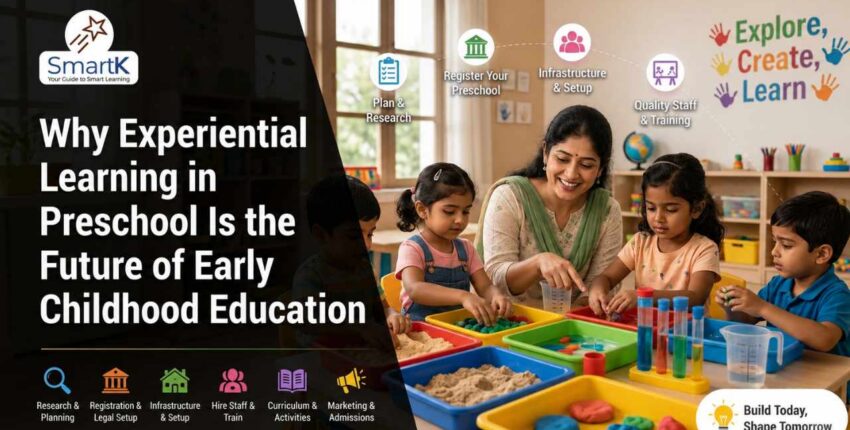
Choosing the right early learning environment is one of the most critical decisions parents face. Two popular options are Montessori schools and Play Schools.
While both focus on early childhood development, they differ in teaching philosophy, classroom organization, curriculum delivery, and overall learning structure.
What Is Montessori Education?
Developed by Dr. Maria Montessori, the Montessori Method is built on the principle that children learn best through self-directed activities and hands-on exploration. Classrooms feature specially-designed learning materials that encourage children to discover concepts independently at their own pace.
Key features include:
- Child-led learning
- Specialized, hands-on learning materials
- Mixed-age classrooms
- Strong focus on self-reliance and independence
- Personalized learning pace
- Practical life skills integration
- Teachers acting as unobtrusive guides rather than lecturers
What Is a Play School?
A Play School introduces young children to a structured learning environment through play-based activities. Knowledge acquisition occurs naturally through interactive games, music, storytelling, art, group play, and social events.
Key features include:
- Focus on social and emotional bonding
- Guided language and communication growth
- Creative expression through arts and crafts
- Physical development through outdoor games
- Early exposure to foundational letters and numbers
- Structured daily routines to build school readiness
Montessori vs Play School: Key Differences
| Feature | Montessori | Play School |
|
Teaching Style |
Child-led, independent exploration |
Teacher-guided, group-oriented activities |
|
Learning Pace |
Self-paced by individual choice |
Uniform, activity-based group progression |
|
Classroom Layout |
Structured learning stations with specific materials |
Flexible play areas and activity corners |
| Curriculum | Specialized Montessori framework | Play-way or theme-based curriculum |
| Teacher’s Role | Observer and individual facilitator | Instructor, leader, and group guide |
| Child Independence |
High emphasis on practical self-care |
Moderate, focused on transition readiness |
|
Assessment |
Continuous observational tracking |
Activity participation and milestone tracking |
Advantages of Montessori Schools
- Encourages Independent Thinking: Children choose tasks and work through them
- Builds Concentration & Discipline: Uninterrupted work periods foster deep
- Develops Problem-Solving Skills: Self-correcting materials teach children to learn from
- Promotes Responsibility: Children clean up and care for their materials
Advantages of Play Schools
- Vibrant & Engaging Environment: Bright settings make school feel fun and
- Accelerated Socialization: Frequent group games teach sharing and teamwork
- Reduces Separation Anxiety: The lighthearted atmosphere eases the transition away from
- Prepares Children for Traditional Schooling: Schedules mirror standard primary classroom