

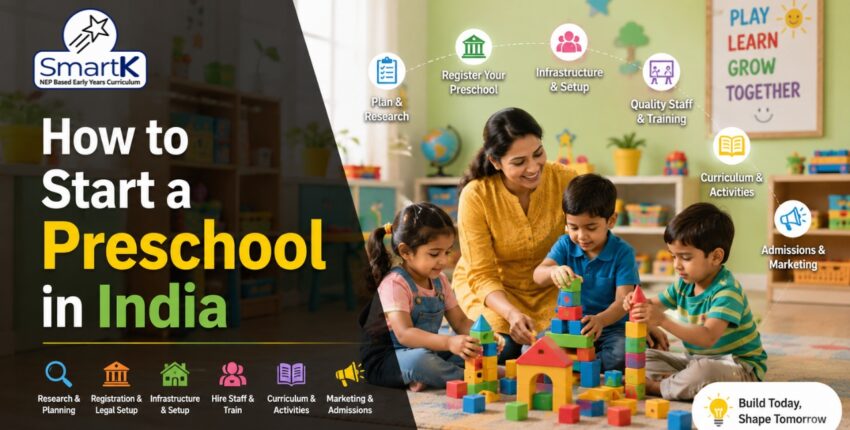
Starting a preschool in India can be a meaningful and rewarding venture. With growing awareness of early childhood education, many parents now look for safe, nurturing, and structured learning environments for young children. This has created strong demand for quality preschools in cities, towns, and emerging residential areas.
However, opening a preschool requires more than renting a space and buying toys. It involves planning, legal compliance, curriculum design, staffing, safety systems, and parent trust. This guide explains how to start a preschool in India step by step.
- Understand the Preschool Market
Before launching, study your local area. Identify:
- Number of young families nearby
- Existing preschools and fee ranges
- Parent expectations
- Demand for daycare or after-school care
- Preferred location and timings
This helps you choose the right business model and pricing strategy.
- Choose Your Preschool Model
You can start a preschool in different ways:
Independent Preschool
You create your own brand, curriculum, and operations.
Franchise Preschool
You operate under an established brand with training and systems.
Home-Based Preschool
A smaller setup run from a residential property, subject to local rules.
Each model has different costs, control levels, and support systems.
- Create a Business Plan
A clear plan helps manage costs and growth. Include:
- Investment budget
- Rent and setup cost
- Staff salaries
- Monthly operating expenses
- Fee structure
- Capacity of students
- Marketing plan
- Break-even timeline
Financial planning is essential before signing a lease or hiring staff.
- Select the Right Location
Location strongly affects admissions. Choose an area that is:
- Safe and accessible
- Near residential communities
- Visible and easy to find
- Spacious and well ventilated
- Suitable for child-friendly interiors
Ground-floor spaces are often preferred for safety and convenience.
- Complete Registration and Legal Requirements
Requirements can vary by state, city, and business structure. Common steps may include:
- Business registration (proprietorship, partnership, LLP, or company)
- GST registration if applicable
- Trade license or local municipal permissions
- Fire safety compliance
- Rental agreement or ownership documents
- Staff employment records
- Health and safety standards
Consult a local legal or compliance expert for your state-specific requirements.
- Design a Child-Friendly Infrastructure
Your preschool should be safe, welcoming, and age-appropriate. Focus on:
- Bright classrooms
- Child-sized furniture
- Safe flooring
- Clean washrooms
- Outdoor play area if possible
- CCTV where appropriate
- Secure entry and exit systems
- First-aid readiness
Safety builds parent confidence.
- Develop Curriculum and Learning Approach
A preschool curriculum should focus on holistic development, not heavy academics. Include:
- Language development
- Pre-math concepts
- Fine and gross motor skills
- Social-emotional learning
- Art and creativity
- Music and movement
- Storytelling and free play
Use activity-based learning suitable for ages 2 to 6.
- Hire and Train Staff
Recruit teachers who are patient, warm, and skilled with young children. You may need:
- Preschool teachers
- Assistant teachers
- Admin support
- Housekeeping staff
- Caregivers for daycare services
Regular training improves quality and consistency.
- Build Trust with Parents
Parents choose preschools carefully. Build credibility through:
- School visits and open houses
- Transparent communication
- Safety policies
- Regular updates
- Clean environment
- Trial classes or orientation sessions
Word of mouth is powerful in preschool admissions.
- Market Your Preschool
Use both online and offline promotion:
- Google Business Profile
- Local SEO website
- Social media presence
- Flyers in nearby societies
- Parent referral programs
- Community events
Focus on trust and educational value rather than aggressive promotion.
Estimated Investment to Start a Preschool in India
Costs vary by city and scale. Major expenses include:
- Rent deposit
- Interior setup
- Furniture and toys
- Licensing and registration
- Salaries
- Branding and marketing
- Technology and CCTV
A small preschool may start with modest investment, while premium centers require significantly more capital.
Final Thoughts
Starting a preschool in India is both a business opportunity and a social impact venture. Success depends on quality education, child safety, trained staff, and strong parent relationships. With proper planning and compliance, you can build a preschool that supports young learners and grows sustainably.