

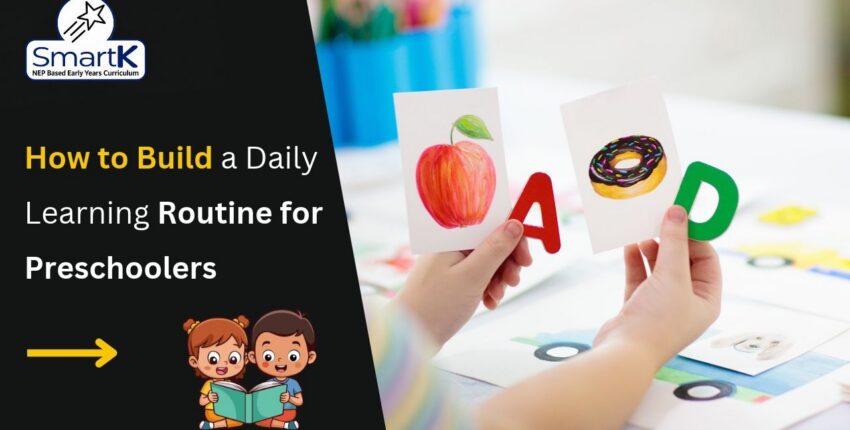
Young children thrive when they know what to expect throughout the day. A consistent routine can help preschoolers feel secure, develop independence, and understand how to balance learning, play, meals, rest, and family time. However, a good routine does not need to be strict or filled with academic activities.
A well-planned preschool daily routine should give children enough structure while leaving room for exploration, creativity, movement, and unplanned play. For parents, the goal is to create a predictable rhythm that supports learning without making home feel like a classroom.
Why Is a Daily Routine Important for Preschoolers?
A predictable routine helps young children understand what comes next. Regular times for waking up, eating, playing, learning, resting, and sleeping can make daily transitions easier.
A daily routine for preschoolers can also encourage independence. When children know where their books or toys belong, when it is time to tidy up, and what happens before bedtime, they gradually learn to manage simple responsibilities themselves.
Routines can also support healthy habits and provide opportunities for learning through everyday activities.
Start the Day with Simple Activities
The morning does not need to begin with formal learning. Getting dressed, brushing teeth, having breakfast, and preparing for the day can all help children practice independence.
Parents can encourage children to make simple choices, such as selecting between two outfits or helping prepare part of breakfast. Conversations during breakfast can also develop vocabulary and communication skills.
The objective is to begin the day calmly rather than rushing children into structured activities.
Include a Short Learning Period
A learning routine for kids should be age-appropriate and relatively short. Preschool children generally learn better through focused activities followed by movement or play rather than long study sessions.
Parents can include reading, storytelling, drawing, puzzles, counting games, phonics activities, or simple hands-on projects. The activity should match the child’s age and interests.
SmartK’s preschool curriculum ideas show how different learning areas can be introduced through engaging and age-appropriate activities.
Making Time for Active Play
Physical activity should be an important part of a preschool routine at home. Children need opportunities to run, jump, dance, balance, climb, or play simple outdoor games.
Active play supports physical development while also giving children a break between quieter activities. Indoor movement games can be useful when outdoor play is not possible.
Parents should avoid creating a schedule that keeps children seated for most of the day.
Use Everyday Activities as Learning Opportunities
Learning does not have to happen only during a planned activity. Everyday tasks such as cooking, shopping, organising toys, watering plants, or sorting clothes can develop useful skills.
Children can count objects, identify colours, compare sizes, follow sequences, learn new vocabulary, and practice responsibility. These experiences make learning relevant to real life.
Include Creative and Quiet Time
A balanced daily schedule for preschoolers should include creative activities as well as periods of quiet time. Drawing, colouring, building, music, storytelling, clay work, and pretend play allow children to express themselves and use their imagination.
Quiet activities such as looking at books, completing puzzles, or listening to stories can help children slow down after active periods.
Keep Meals and Sleep Consistent
Meals and sleep are important parts of a child’s daily rhythm. Regular meals and snack times can help children develop healthy habits, while an appropriate bedtime routine supports rest and overall wellbeing.
A calming bedtime routine might include tidying toys, taking a bath, reading a story, and preparing for sleep. Keeping these steps relatively consistent can help children understand when the day is coming to an end.
Keep the Routine Flexible
A routine should provide structure, not become a source of stress. Family schedules, children’s energy levels, weekends, travel, and special events can all require changes.
Parents should be willing to adjust activities when children need more rest or when something unexpected happens. The most important goal is maintaining a general rhythm rather than following every activity at an exact time.
SmartK’s activity-based learning approach also highlights the value of active participation and meaningful learning experiences for young children.
Frequently Asked Questions
- What should a preschool daily routine include?
A preschool daily routine can include waking up, meals, personal care, reading, short learning activities, outdoor or active play, creative activities, free play, rest, and bedtime.
- How long should preschool learning activities be at home?
Learning activities should generally be short and age-appropriate. Parents should focus on the child’s attention and interest rather than expecting them to sit and study for long periods.
- What is a good preschool routine at home?
A good preschool routine at home balances learning, play, physical activity, meals, rest, family interaction, and sleep. It should be predictable but flexible enough to accommodate the child’s needs.
- Should preschoolers follow the same schedule every day?
The overall routine can remain consistent, but individual activities do not need to happen at exactly the same time every day. Flexibility helps children adapt to changes while still benefiting from predictable routines.
- How can parents make a daily schedule for preschoolers interesting?
Parents can include stories, games, outdoor activities, art, music, puzzles, household tasks, and child-led play. Giving children simple choices can also make them more engaged in the routine.
- Can everyday household activities be part of a learning routine?
Yes. Cooking, sorting, cleaning up toys, shopping, gardening, and organising objects can support language, numeracy, problem-solving, motor skills, and independence.