

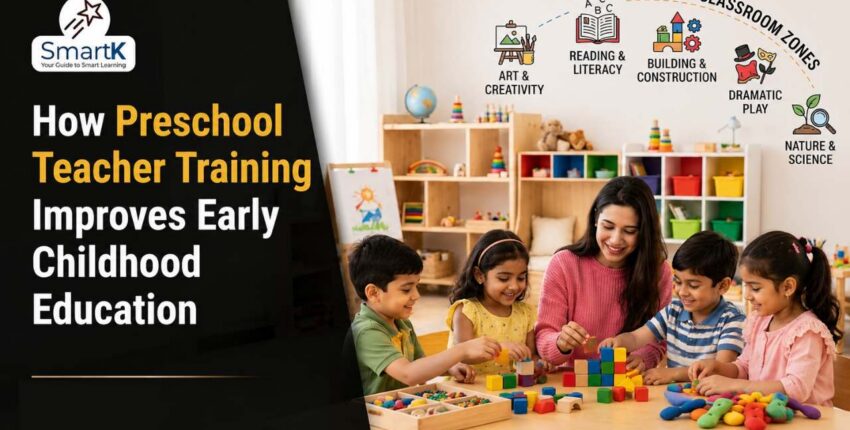
Teachers are one of the most important pillars of early childhood education. In preschool classrooms, educators do much more than teach alphabets and numbers — they help shape a child’s emotional, social, cognitive, and communication development during the most critical learning years. This is why effective preschool teacher training plays a vital role in improving the quality of preschool education.
As modern education systems move toward experiential learning, activity-based teaching, and holistic child development, preschool teachers must continuously upgrade their teaching methodologies and classroom management skills. Well-trained educators create more engaging classrooms, better learning experiences, and stronger developmental outcomes for children.
Schools investing in teacher training programs often experience improved classroom performance, stronger parent trust, and better educational outcomes overall.
Why Is Preschool Teacher Training Important?
Teaching preschool children requires a specialized understanding of child psychology, behaviour management, emotional development, and interactive teaching methods. Young children learn differently from older students, which means preschool teachers need unique classroom strategies and communication approaches.
Effective teacher training helps educators:
- Understand child development stages
- Improve classroom engagement
- Use activity-based learning methods
- Manage classroom behaviour positively
- Build communication and emotional support skills
- Create interactive learning environments
Modern schools implementing an activity-based preschool curriculum, child-centric teaching methods, and experiential learning systems depend heavily on well-trained teachers for successful implementation.
-
Helps Teachers Understand Child Psychology
One of the biggest benefits of preschool teacher training is an improved understanding of how young children think, learn, and behave.
Every child develops differently, and teachers need to understand:
- Emotional needs
- Attention span variations
- Learning styles
- Social behaviour patterns
- Communication challenges
This understanding helps teachers create supportive and engaging classroom experiences for all learners.
-
Improves Classroom Engagement
Modern preschool classrooms require active participation rather than passive instruction. Teacher training programs help educators learn how to conduct:
- Storytelling sessions
- Group learning activities
- Creative classroom games
- Experiential learning tasks
- Interactive teaching exercises
Engaging classrooms improve:
- Student participation
- Learning retention
- Classroom behaviour
- Communication confidence
Schools using experiential preschool learning programs often require teachers to adopt more creative and activity-based teaching methods.
-
Supports Holistic Child Development
Modern early childhood education focuses on much more than academics. Preschool teachers are expected to support:
- Emotional development
- Social interaction
- Creativity
- Communication skills
- Cognitive growth
- Physical coordination
Teacher training programs help educators create balanced learning experiences that encourage complete child development. This aligns strongly with holistic preschool education approaches recommended in modern educational frameworks.
-
Enhances Communication Skills
Preschool teachers interact regularly with both children and parents. Strong communication skills help teachers:
- Build trust with parents
- Support emotional learning
- Encourage classroom participation
- Handle behavioural concerns positively
Training programs often include communication strategies that improve teacher-parent collaboration and classroom interaction.
-
Improves Classroom Management Skills
Managing preschool classrooms requires patience, organization, creativity, and emotional understanding. Teachers must guide energetic young learners while maintaining positive classroom environments.
Teacher training helps educators:
- Manage classroom routines effectively
- Encourage discipline positively
- Handle behavioural situations calmly
- Maintain student engagement
- Create structured learning environments
Positive classroom management improves both learning outcomes and emotional comfort for children.
-
Encourages Innovation in Teaching Methods
Education trends continue to evolve, with increasing focus on:
- Activity-based learning
- STEM education
- Social-emotional learning
- Creative exploration
- Technology-supported learning
Teacher training programs help educators stay updated with modern teaching methodologies and innovative classroom practices.
Schools implementing modern preschool curriculum solutions often provide ongoing professional development and educational support for teachers.
-
Builds Parent Trust and School Reputation
Parents today are more aware of educational quality and teaching standards. Schools with professionally trained teachers often build stronger trust among parents and communities.
Well-trained teachers contribute to:
- Better classroom experiences
- Improved student development
- Higher parent satisfaction
- Increased preschool admissions
- Stronger school reputation
Teacher quality is now considered one of the most important factors in preschool selection.
Role of Continuous Teacher Development
Teacher training should not be limited to one-time workshops. Continuous professional development helps teachers adapt to:
- Changing educational trends
- New curriculum frameworks
- Classroom technology
- Child development research
- Innovative learning methodologies
Regular skill development improves teaching confidence and classroom effectiveness over time.
Conclusion
The importance of preschool teacher training continues to grow as early childhood education becomes more child-centric and development-focused. Well-trained teachers create engaging classrooms, support holistic child development, and improve overall learning experiences for young learners.
Schools investing in modern teacher training programs are better equipped to implement experiential learning, activity-based education, and emotionally supportive classroom environments. In today’s evolving education landscape, teacher quality remains one of the strongest foundations for successful preschool education.