

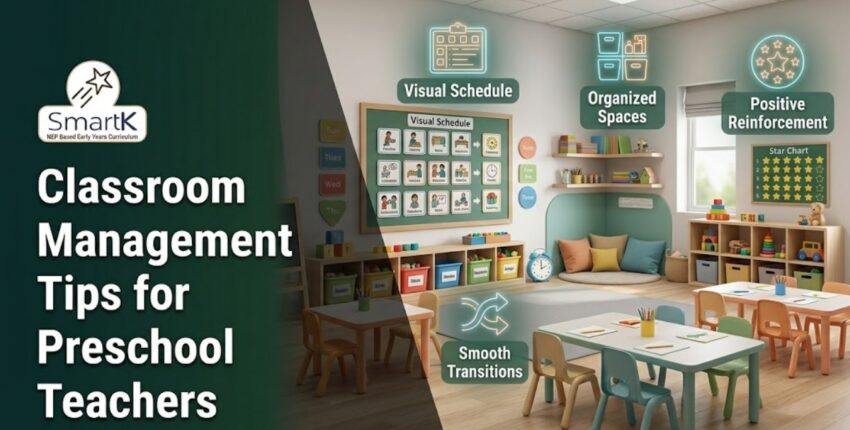
Managing a preschool classroom requires more than keeping children busy. Young learners are energetic, curious, emotional, and still developing self-control. Effective classroom management helps create a safe, structured, and positive environment where children can learn through play and daily routines.
Strong classroom management in preschool is not about strict discipline — it’s about building routines, setting clear expectations, guiding behaviour, and designing an engaging space that supports development.
Why Classroom Management Matters in Preschool
Preschool children learn best when they feel secure and know what to expect. A well-managed classroom reduces stress, prevents frequent disruptions, and gives teachers more time for meaningful interaction and learning activities.
Strong classroom management also helps children develop independence, social skills, and emotional regulation.
- Establish Clear Daily Routines
Young children thrive on predictability. Keep a consistent schedule for arrival, circle time, play, snack, outdoor activity, and departure.
When children understand what comes next, transitions become smoother and anxiety decreases.
- Use Simple and Positive Rules
Create a few easy classroom rules using clear language such as:
- Use kind hands
- Listen when someone speaks
- Walk inside the classroom
- Put toys back after play
Repeat rules regularly and model them through actions.
- Build Relationships First
Children respond better to teachers they trust. Greet each child warmly, learn their interests, and speak respectfully.
Strong teacher-child relationships often prevent many behavior issues before they begin.
- Keep Children Actively Engaged
Many disruptions happen when children are bored or waiting too long. Plan hands-on, age-appropriate activities that keep children involved.
Use songs, movement, stories, sensory play, and short learning tasks to match preschool attention spans.
- Prepare Smooth Transitions
Moving from one activity to another can be challenging. Use transition strategies such as:
- Clean-up songs
- Countdown warnings
- Visual schedules
- Line-up games
- Movement cues
These tools help children shift attention without frustration.
- Arrange the Classroom Thoughtfully
A well-organized room supports better behaviour. Create clear learning areas for reading, blocks, art, dramatic play, and quiet time.
Keep materials accessible and reduce clutter to avoid overstimulation.
- Reinforce Positive Behaviour
Notice and praise helpful actions. Instead of only correcting mistakes, say:
- Thank you for sharing
- I like how you cleaned up
- You waited patiently
Positive reinforcement encourages children to repeat desired behaviour.
- Teach Emotional Skills
Preschoolers are still learning how to manage feelings. Help them identify emotions and use calming strategies such as deep breathing, asking for help, or using words.
A calm corner or quiet space can support emotional regulation.
- Be Consistent with Boundaries
Children test limits to understand them. Respond calmly and consistently when rules are broken. Avoid harsh reactions or frequent threats.
Clear and steady responses build security and trust.
- Communicate with Parents
Families are important partners in behaviour support. Share routines, progress, and concerns respectfully. Consistent expectations between home and school often improve outcomes.
Common Classroom Management Mistakes to Avoid
- Having too many rules
- Long waiting times between activities
- Activities that are too difficult or too easy
- Inconsistent responses to behaviour
- Overusing punishment
- Ignoring positive behaviour
Final Thoughts
Effective classroom management for preschool teachers combines structure, warmth, and developmentally appropriate guidance. With clear routines, engaging activities, positive reinforcement, and strong relationships, teachers can create a classroom where children feel safe, confident, and ready to learn every day.